The phrase "second brain" is everywhere now, and most of what's said about it is wrong, or at least incomplete. People hear it and picture a fancier notes app. Another place to dump links. Notion with better tagging. That's not it, and the gap between what people think a second brain is and what it actually does is the reason so many of them feel like a disappointment.
So let's clear it up.
The term was popularised by Tiago Forte's Building a Second Brain, and the core instinct behind it is right: your mind is a lousy place to store everything you'll need later. As David Allen put it long before any of this had a name, and Forte often repeats, your head is for having ideas, not holding them. The question is what you build to hold them instead.
A second brain is a store of what you know, kept in a form an AI can read. Your notes, your projects, the people you deal with, the decisions you've made and why. The important word isn't "brain," it's "yours." A real second brain lives in plain files you own, not inside one app's database. That's what lets it outlive any single tool and get read by any AI you choose. The moment your knowledge is trapped inside a product, it isn't a second brain. It's a tenant in someone else's building.
Not a notes app. Not a collection. Not the whole system.
It isn't a notes app. A notes app is where notes go to be forgotten. A second brain is built to be read, by you and by an AI, and used. The structure exists so things can be found and acted on, not so they look organised in a sidebar.
Notion, Evernote, Obsidian, Apple Notes, Roam. These are containers, not second brains. A great container with nothing alive inside it is still just a container. People download a Notion template called "second brain," fill it for two weekends, and quietly stop. Not because the template was bad, but because nothing in the workflow ever used the notes once they were filed.
I ran my whole second brain as a Notion template for a year. It looked perfect. I opened it maybe twice.
It isn't about collecting, either. The internet trained us to hoard. Save the article, clip the thread, bookmark the video, feel productive, never look at any of it again. A second brain full of things you collected but never use is just a tidier version of the same problem. The value isn't in what you store. It's in what gets used.
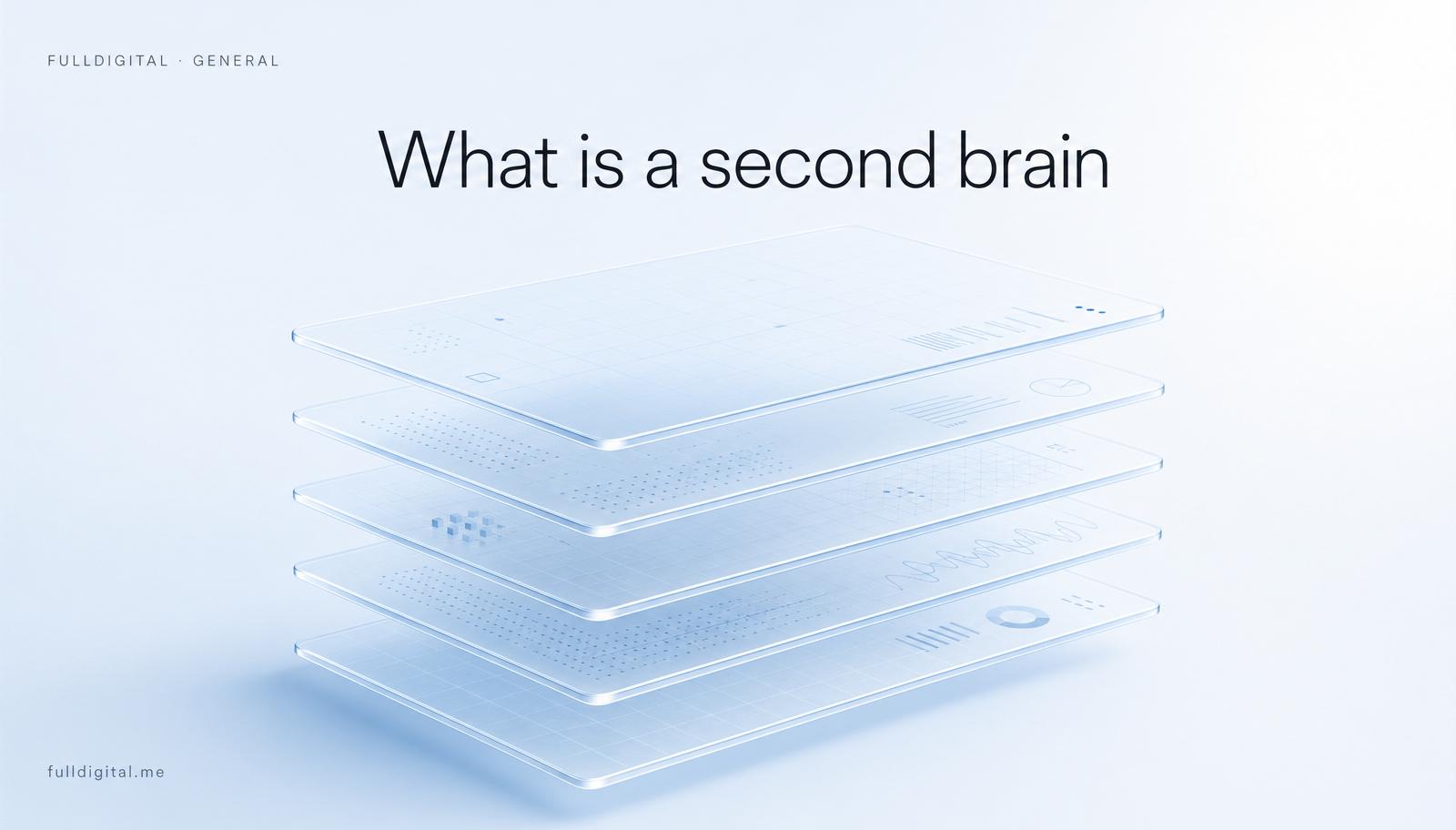
And here's the one almost nobody says out loud: a second brain is not the whole system. It's one layer. It's the memory. On its own, memory does nothing. It sits there, neat and quiet, while you keep doing the work by hand. Memory alone is a library. The system is what reads that library to you and acts on it.
The people who feel let down by their second brain usually built exactly this and stopped, expecting the neat library to somehow start working. It won't, because nothing was ever built to use it.
Building the library feels like the achievement.
It's visible. You can admire it. So people pour weeks into structure and tagging and the perfect setup, and treat that as the finish line. It isn't even half the system.
There's actually research behind why this feels so satisfying. In a well-known 2011 study published in Science, Sparrow, Liu and Wegner showed that when people expect to be able to look information up later, they remember less of it but remember better where they stored it, what they called the Google effects on memory. Externalising knowledge changes what your brain bothers to retain. Philosophers Andy Clark and David Chalmers made the broader case in "The Extended Mind" (1998): the tools you offload thinking into become part of the mind doing the thinking. Psychologists call the social version of this transactive memory. It means treating an external system, or another person, as part of your own remembering.
That's the real promise of a second brain. Not a prettier archive. A partner in remembering. But the partner only works if something can actually read what's on the shelves. A library nobody enters is just expensive wallpaper.
The memory is the raw material. The thing that makes it valuable is everything that runs on top: the skills that act on it, the tools that connect it to your real work, the focus that points it at what matters this week. Without those, the library just sits there looking organised. With them, the same files start pulling real weight in your week.
“Memory alone is a library. The system is what reads that library to you and acts on it.”
The 2014 version was for you. The 2026 version is for your AI.
When the second-brain idea took off, the reader was always you. You wrote notes, you re-read them, you connected them. The whole craft was about making future-you a better reader of past-you.
That's still useful, but it's no longer the point. The reader now is your AI. It can hold thousands of pages in working memory at once, cross-reference them in seconds, and use them to draft, plan, summarise, or decide on your behalf. Which means the question shifts: not "how do I organise this so I can find it", but "how do I organise this so an AI can use it".
The answer is boring in the best way: plain text files, in folders you understand, on storage you control. No proprietary block format. No vendor lock-in. Markdown a model trained yesterday can read, and so can a model that ships next year. That portability is what turns a second brain from a productivity hobby into infrastructure you actually keep.
A second brain is a great place to start. It's a terrible place to stop.
If you build only the library, you'll get the same disappointed feeling so many others have. If you build the library and then wire it into the rest of the system, a constitution that tells your AI who you are, skills that act on the notes, tools that reach into your real work, and a weekly loop that keeps the whole thing current, the library finally starts paying you back.
That bigger picture is what we call the AIOS, an AI operating system built in five layers. The second brain is layer two. The next thing to read is the Memory layer, which is where this stops being theory and starts being the actual files on your disk.
If you want to build your own AIOS layer by layer, that's exactly the group we're putting together. Come hang out on the waiting list. No pitch, no spam. Just early access and the conversations as we go.
Entrepreneur from Latvia. Building FullDigital so people stay free in the age of AI. I write about what actually works in my own week, not what sounds good on a conference stage.
Connect on LinkedIn