
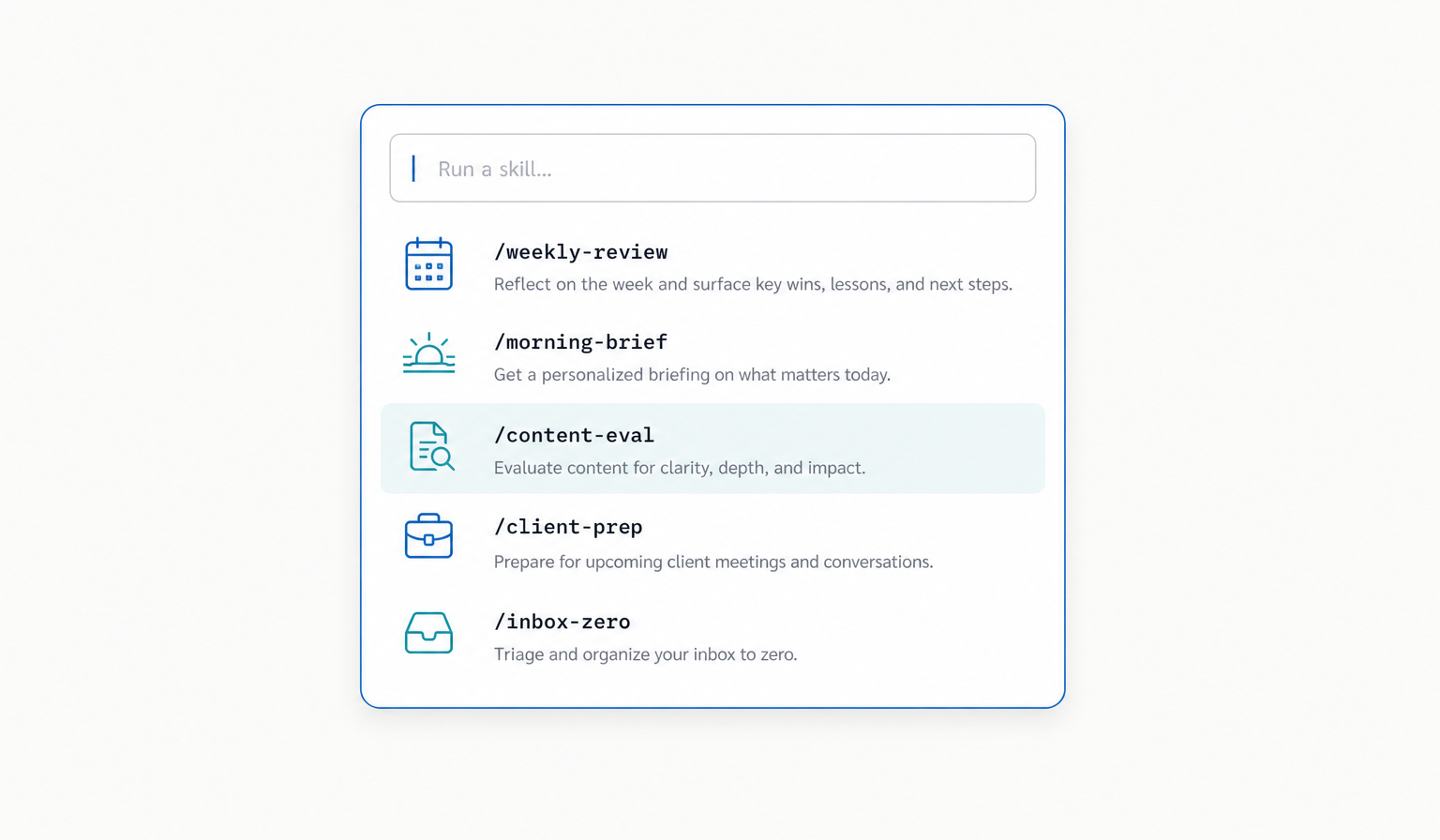
Tu uzbūvēji atmiņu. Un tālāk? Šo jautājumu uzdod gandrīz visi, un tas ir īstais. Atbilde ir šis slānis. Prasmes ir tas, ko tavs AI patiesi spēj darīt — definēts vienreiz un izsaucams, kad vien vajag.
Nedēļas apskats. Rīta pārskats. Satura izvērtētājs. Klienta sagatavošanas rutīna. Tā vietā, lai katru reizi skaidrotu vienu un to pašu uzdevumu no jauna, tu iemāci to kārtīgi vienreiz, dod tam vārdu un izpildi pēc pieprasījuma.
Tavas apgūtās, iztrenētās spējas.
Cilvēka analoģijā tās ir tavas iemācītās prasmes. Ne kas tu esi, ne ko atceries, bet ko esi trenējis tik ilgi, kamēr vari vienkārši izdarīt. Cilvēks, kas iemācījies vadīt auto, no rīta to nemācās no jauna.
Prasme, kas reiz iebūvēta tavā sistēmā, strādā tāpat. Tā ir tur, uzticama, un ar katru lietošanu kļūst labāka.
Prasmes ir tās, kas atver kartotēkas skapi.
Iepriekšējais slānis beidzās ar brīdinājumu: atmiņa, ar ko neviens neko nedara, ir kartotēkas skapis, ko neviens neatver. Prasmes ir tās, kas to atver. Prasme nolasa attiecīgās atmiņas daļas un kaut ko ar tām izdara.
Nedēļas apskats nolasa, kas notika šonedēļ, un pasaka, kas pakustējās un kas ne. Klienta sagatavošanas prasme nolasa visu, ko zini par šo cilvēku, un pirms sarunas ieliek tev rokās kopsavilkumu. Atmiņa bija izejmateriāls. Prasme ir tā, kas to pārvērš paveiktā darbā.
“Prasme ir uzdevums, kas vienreiz izskaidrots pietiekami labi, lai tev nekad vairs to nevajadzētu skaidrot.”
Vairāk, nekā šķiet — bet nebūvē visu uzreiz.
Cilvēki nenovērtē, cik daudz AI sistēma patiesi spēj, kad tai ir tavs konteksts. Pētniecība un ikdienas informācija. Saturs: melnraksti, pārpakošana, video, attēli, balss. Mārketings un pārdošana: uzrunas, piltuves, teksti, piedāvājumi. Attiecības: sarunu un tikšanos pārvēršana turpinājumos un atmiņa par to, ar ko un kāpēc runāji. Operācijas: atkārtotā darba automatizēšana. Personīgā izaugsme: veselība, mērķi, refleksija — sistēma kā domāšanas partneris.
Tu nebūvē visu uzreiz, un nevajag. Nolūks nav krāt prasmes kā trofejas. Nolūks ir paņemt darbu, kas patiešām nogurdina tavu nedēļu, un atkārtojamās daļas nodot sistēmai, kas jau zina tavu kontekstu. Vissvarīgākā prasme ir tā, kas atdod tev to laiku, ko tu tieši tagad zaudē.
Sāc ar mazu. Pilnveido ar katru palaišanu.
Ja vari soli pa solim aprakstīt, kā gribētu, lai ass asistents ko izdara, tu vari to pārvērst prasmē. Pirmajai jābūt mazai un acīmredzami noderīgai — ne ambiciozai. Izvēlies uzdevumu, ko atkārto, pieraksti, kā tam būtu jānotiek, dod tam vārdu, palaid to un nākamreiz pielabo.
Pielabošana ir noslēpums. Prasme dažās lietošanas reizēs kļūst manāmi labāka, kad to koriģē — tāpat kā trenētu jaunu darbinieku. Sāc ar vienu atkārtojamu uzvaru. Uztaisi, ka strādā. Pārliecība un atgūtais laiks ir kurināmais nākamajai.
Prasmes lasa Atmiņu un izmanto Rīkus.
Prasmes nestrādā izolēti — tā ir visa dizaina jēga. Katra prasme nolasa vienu vai vairākas Atmiņas jomas un izmanto tavus Rīkus, lai rīkotos. Mārketinga prasme nolasa, ko zini par savu biznesu un tīklu, un pēc tam ar e-pasta un automatizācijas rīkiem kaut ko ar to izdara. Pētniecības prasme var lasīt jebko un sniedzas ārā uz tīmekli.
Šis vienkāršais raksts — prasme lasa atmiņu un izmanto rīkus — ir visa AIOS dzinējs. Kad to ieraudzi, visa sistēma pārstāj izskatīties sarežģīta un sāk izskatīties kā mazs skaits labi sakārtotu daļu.
Ko cilvēki lieto
- 01Atkārtojamas komandas, ko definē vienreiz un izsauc pēc vārda.
- 02Nedēļas apskata rutīna.
- 03Rīta pārskats un satura izvērtētājs.
- 04Klienta sagatavošanas un turpinājumu rutīnas — mazas, nosauktas, pilnveidojas ar lietošanu.
Apstāties pie atmiņas — vai sākt pārāk ambiciozi.
Divi neveiksmes veidi. Apstāties pie atmiņas, un sistēma nekad nedarbojas. Vai sākt ar sarežģītāko automatizāciju, ko vari iedomāties, un iestrēgt. Uzbūvē vienu mazu prasmi, kas šonedēļ atdod tev laiku. Tad būvē nākamo.
Vairāk par Prasmes slāni drīzumā blogā.
Gribi uzbūvēt savu kopā ar mums? Pievienojies gaidītāju sarakstam