
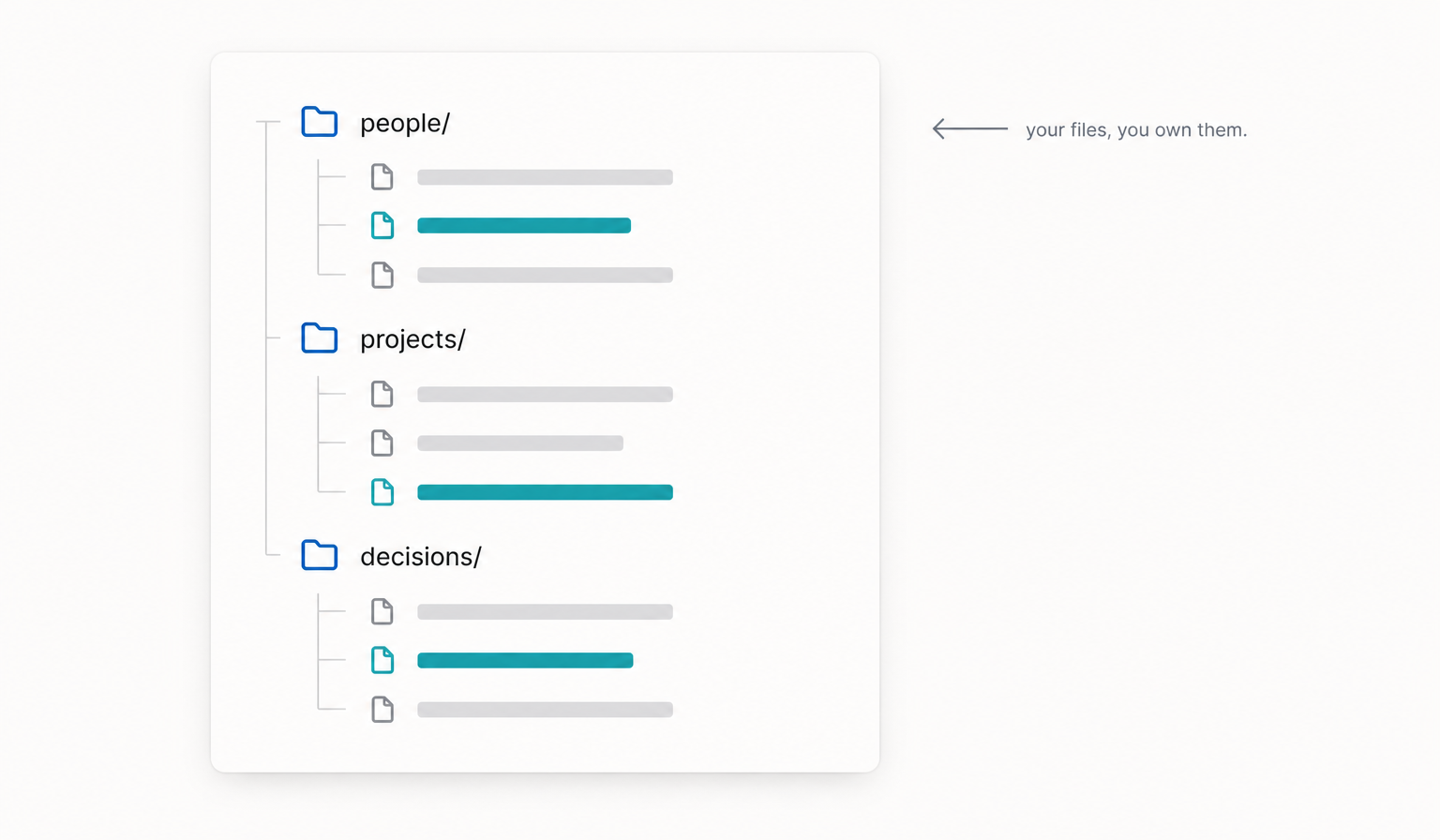
Atmiņa ir viss, ko tavs AI zina par tavu īsto dzīvi. Tavas piezīmes, tavi projekti, cilvēki, ar kuriem tu strādā, lēmumi, ko esi pieņēmis, un vēsture aiz tiem. Ja Konstitūcija ir tavs raksturs, tad Atmiņa ir tava ilgtermiņa atmiņa: ne kas tu esi, bet kas ir noticis un kas ir patiess tavā pasaulē tieši tagad.
Svarīgākā daļa ir vieta, kur tā dzīvo. Īsta Atmiņa sēž vienkāršos failos, kas pieder tev — ne ieslēgta viena čata rīka vēsturē.
Tava dzīve — failos, kas pieder tev.
Faili ir avots. AI ir tikai saskarne, kas tos lasa. Nomainot modeli nākamgad, tava atmiņa nāk līdzi neskarta — jo tā nekad nebija ieslēgta pašā modelī.
Tas ir tas, ko cilvēki domā, kad saka pieder tavs AI, nevis īrē to. Īres versija tur tavu dzīvi produktā, ko tu nekontrolē. Īpašuma versija tur tavu dzīvi tavās rokās un ļauj to lasīt jebkuram AI.
Otrās smadzenes ir pamats, ne finiša līnija.
"Otrās smadzenes" ir populāra frāze, un laba — bet tā apraksta tikai šo slāni. Daudzi cilvēki apstājas šeit. Uzbūvē skaistu, sakārtotu piezīmju krātuvi, jūtas produktīvi, un tad ar to nekas nenotiek. Tā ir slazds, un ir vērts to nosaukt agri.
Atmiņa, ar kuru neviens neko nedara, ir sakopts kartotēkas skapis, ko neviens neatver. Pie darbojošajām daļām nonāksim nākamajos slāņos. Atmiņa ir izejmateriāls, uz kura šie slāņi darbojas — tieši tāpēc ir vērts to uzbūvēt labi.
“Atmiņa viena pati ir bibliotēka. Sistēma ir tā, kas šo bibliotēku tev nolasa un izmanto.”
Vienkārša struktūra, ko uzturi, pārspēj perfektu, ko pamet.
Instinkts ir pār-inženierēt šo. Cilvēki projektē sarežģītas sistēmas ar desmitiem kategoriju, pirms vēl ir uzrakstījuši vienu īstu piezīmi, un struktūra sabrūk zem sava svara. Sāc ar nelielu skaitu dzīves jomu, kas aptver, kā tu patiesībā dzīvo un strādā, un audzē jaunu jomu tikai tad, kad tā patiesi izaug no savas mājas.
Viens noteikums izglābj no haosa: viss par vienu tavas dzīves jomu dzīvo kopā, vienā vietā. Pētījumi, dati, atsauces — visi zem šīs jomas. Turi katru dzīves daļu veselu, un viss paliek atrodams.
Un turi tīru līniju starp Atmiņu un Konstitūciju. Fakti par tavu dzīvi, kas notiek, ko esi izlēmis — iet Atmiņā. Kas tu esi un ko tu novērtē — iet Konstitūcijā.
Atšķirība starp AI, kas mīnē, un AI, kas zina.
Pajautā ģenēriskam čatam par savu situāciju, un tas izdomās ticama svešinieka atbildi, jo tam nav nekā īsta, uz ko balstīties. Pavērs modeli uz savu atmiņu — un atbildes pilnībā mainās. Tagad tas argumentē par taviem projektiem, taviem cilvēkiem, tavām īstajām robežām. Tas pārstāj būt iespaidīgs un sāk būt noderīgs.
Tā arī uzkrājas veidā, kā nekas cits. Katra piezīme, lēmums un saruna, ko fiksē, padara nākamo atbildi labāku. Gadu vēlāk tava Atmiņa ir kaut kas, ko jauns rīks nekad nespētu atkārtot.
Ko cilvēki lieto
- 01Vienkārši faili, ko tu kontrolē, kā mājvieta visam.
- 02Vienkārša, izturīga struktūra ap tavām īstajām dzīves jomām.
- 03Ieradums pārvērst sarunas un lēmumus paturētā atmiņā.
- 04Lokāla, paša īpašumā esoša glabātuve — lai tavi dati paliek tavi.
Uzskatīt otrās smadzenes par finiša līniju.
Tā nav. Tas ir pamats, uz kura darbojas strādājošie slāņi. Uzbūvē to labi, tad liec tam darboties.
Vairāk par Atmiņa slāni drīzumā blogā.
Gribi uzbūvēt savu kopā ar mums? Pievienojies gaidītāju sarakstam