
Fokuss (Focus)
Tavi projekti, uzdevumi un atgriezeniskā saite, kas visu tur asu.
Tev var būt spēcīgs raksturs, bagāta atmiņa, prasmīgas prasmes un savienoti rīki, un tomēr sistēma, kas dreifē. Fokuss ir slānis, kas to tur pavērstu uz to, kas patiešām šobrīd ir svarīgs.
Tas tur tavus aktīvos projektus, šīs nedēļas mērķus un šodienas uzdevumus — un nes atgriezenisko saiti, kas notur visu sistēmu uzlabojamies, nevis lēnām novecojam.
Uzmanība un griba tavai AIOS.
Cilvēka analoģijā tā ir uzmanība un griba. Viss tavs raksturs, zināšanas un prasme nozīmē maz, ja šodien nav nekur pavērsts. Fokuss ir tas, kas tos pavērš.
Šis ir slānis, kas tavam AI pasaka, no visa, ko tas zina par tevi, kam pievērsties šonedēļ — lai palīdzība ir attiecināma uz to dzīvi, ko dzīvo tieši tagad, ne uz kaut kādu vidējo tavas versijas variantu no pirms sešiem mēnešiem.
Bez Fokusa arī skaista AIOS noveco.
Bez Fokusa arī skaisti uzbūvēta AIOS pārvēršas sakoptā arhīvā, ko neviens neizmanto. Tā zina visu un konkrēti nedara neko, jo nekas nav pateicis, kas ir steidzams. Fokuss ir pretlīdzeklis.
Kad tava sistēma redz tavas īstās prioritātes — projektus un to termiņus, tās dažas lietas, kas svarīgas šonedēļ — katrs cits slānis tiek uz tām pavērsts. Prasmes strādā pie dzīvā. Atmiņa tiek nolasīta par labu tam, ko cenies pakustināt. Tā pati sistēma, kas dreifēja, kļūst par sistēmu, kas grūž uz priekšu.
Šeit vairums cilvēku sajūt atšķirību starp rīku un partneri. Partneris zina, ko tu nes šonedēļ.
“Sistēma bez atgriezeniskās saites laika gaitā kļūst sliktāka, jo tava dzīve iet uz priekšu, bet tā ne. Sistēma ar to uzkrājas.”
Konteksta salikšana + atgriezeniskā saite.
AIOS ir divas lietas, kas nav slāņi, bet kustības, kas notiek pāri visiem pieciem slāņiem — un tieši Fokusā tās sajūt visspilgtāk.
Pirmā ir konteksta salikšana: jebkuram uzdevumam tava sistēma savelk kopā pareizās daļas — mazliet no rakstura, attiecīgo atmiņu, to, kas šobrīd ir fokusā — un saliek tieši to kontekstu, kas šim jautājumam vajadzīgs. Vairums cilvēku domā, ka AI maģija ir pieprasījums. Tā nav. Maģija ir konteksts, ko tam dod, un konteksta salikšana ir sistēma, kas to dara tavā vietā automātiski.
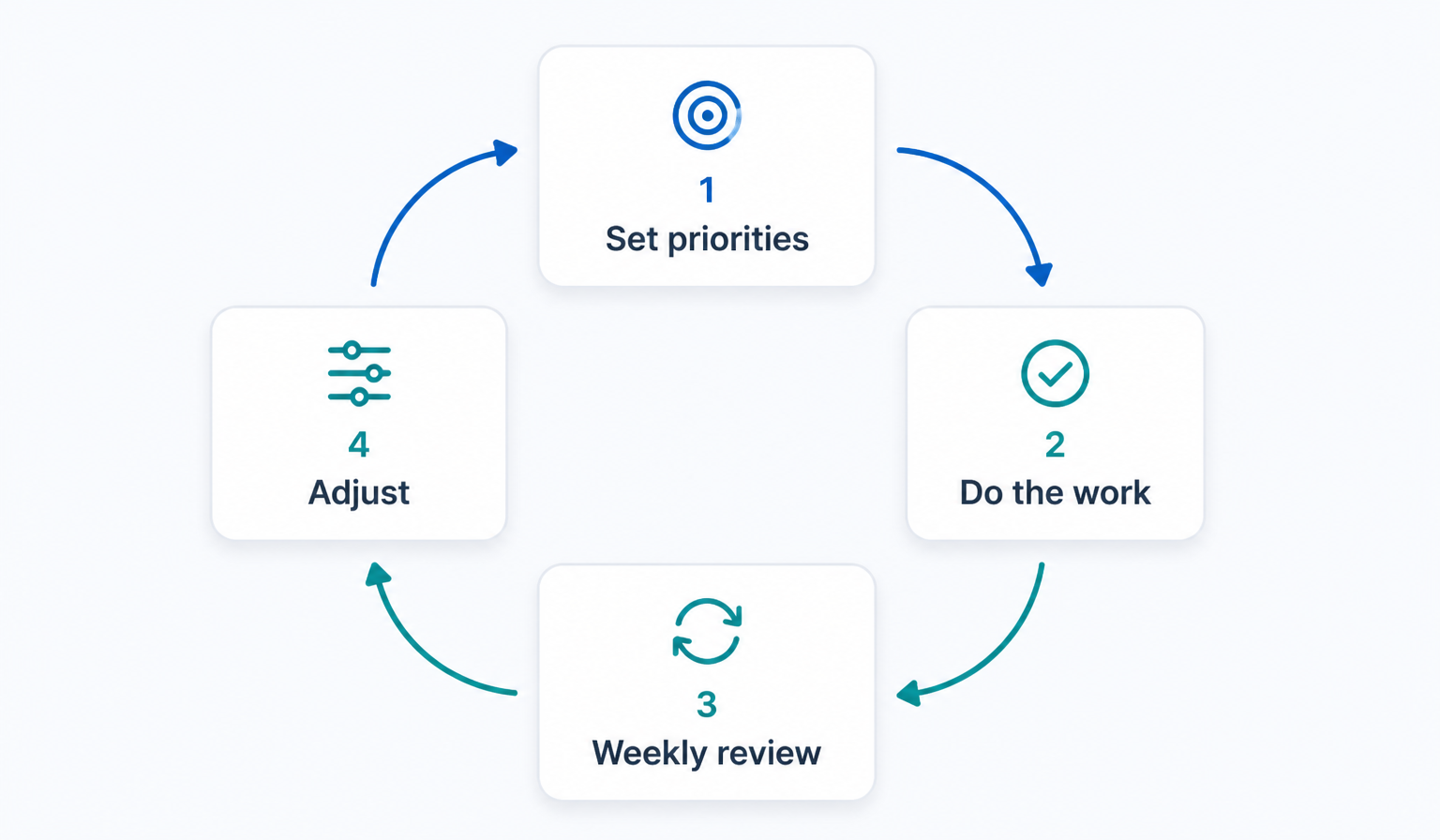
Otrā ir atgriezeniskā saite, un tā dzīvo tieši šeit. Kamēr strādā un pārskati, rezultāti plūst atpakaļ. Kas darbojās, kas ne, kas mainījās. Nedēļas apskats ievada atziņas atpakaļ atmiņā un prioritātēs, tā ka nākamnedēļ sistēma ir mazliet asāka nekā šonedēļ. Tā ir sirdspukstīšana, kas neļauj AIOS pagurt.
Īsi, godīgi, konsekventi.
Turi fokusu īsu un godīgu. Garš prioritāšu saraksts ir tas pats, kas nekādu prioritāšu. Prasme ir nosaukt tās dažas lietas, kas patiesi svarīgas tagad, un ļaut sistēmai tās redzēt.
Tad izveido vienkāršu ritmu: regulārs apskats, kur skaties, kas pakustējās un kas ne, un ievadi to atpakaļ. Tam nav jābūt izsmalcinātam. Tam jābūt konsekventam. Tie, kas no savas AIOS iegūst visvairāk, nav ar sarežģītāko iestatījumu — tie ir tie, kas tur fokusu aktuālu un patiesi palaiž atgriezenisko saiti.
Ko cilvēki lieto
- 01Īss īsto prioritāšu saraksts.
- 02Aktīvi projekti ar termiņiem.
- 03Uzdevumu izsekošana, ko sistēma redz.
- 04Regulārs apskats, kas noslēdz loku un ievada atziņas atpakaļ.
Uzbūvēt sistēmu un nekad to nepavērst.
Konteksts bez fokusa ir troksnis. Turi fokusu aktuālu, palaid atgriezenisko saiti, un pārējie četri slāņi beidzot vilks vienā virzienā.
Vairāk par Fokuss slāni drīzumā blogā.
Gribi uzbūvēt savu kopā ar mums? Pievienojies gaidītāju sarakstam